






Synapse
A neuro-response simulator that shows how the brain will perceive, feel, remember and decide about your work before the market sees it.

- 01
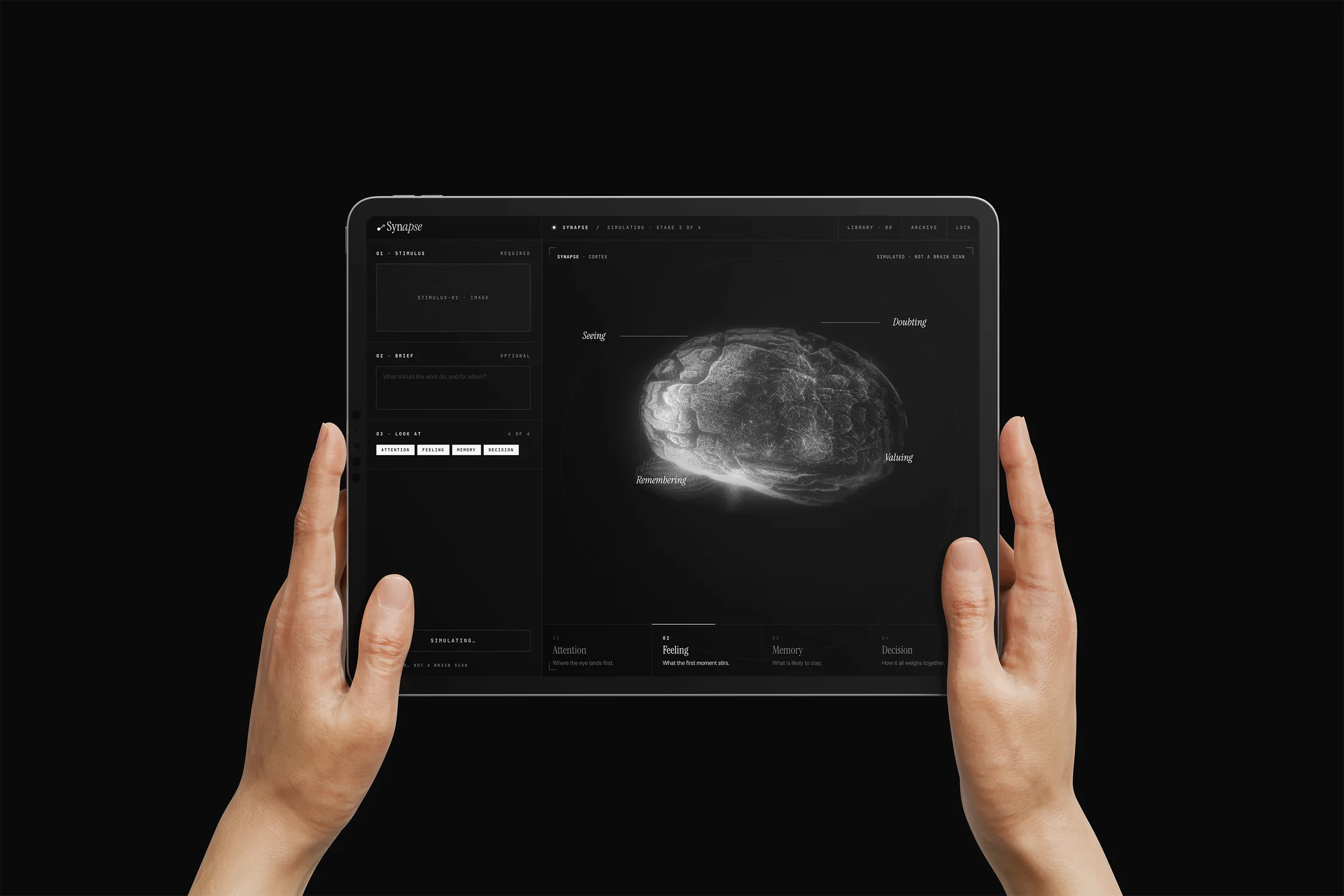
Attention
What the eye lands on in the first second, and whether it is the right thing.
- 02
Feeling
Trust, desire, stress and calm, read through the chemistry each element triggers.
- 03
Memory
What survives after 24 hours and 7 days, and whether it stays linked to your brand.
- 04
Decision
Friction, perceived value and the likelihood of the next step.
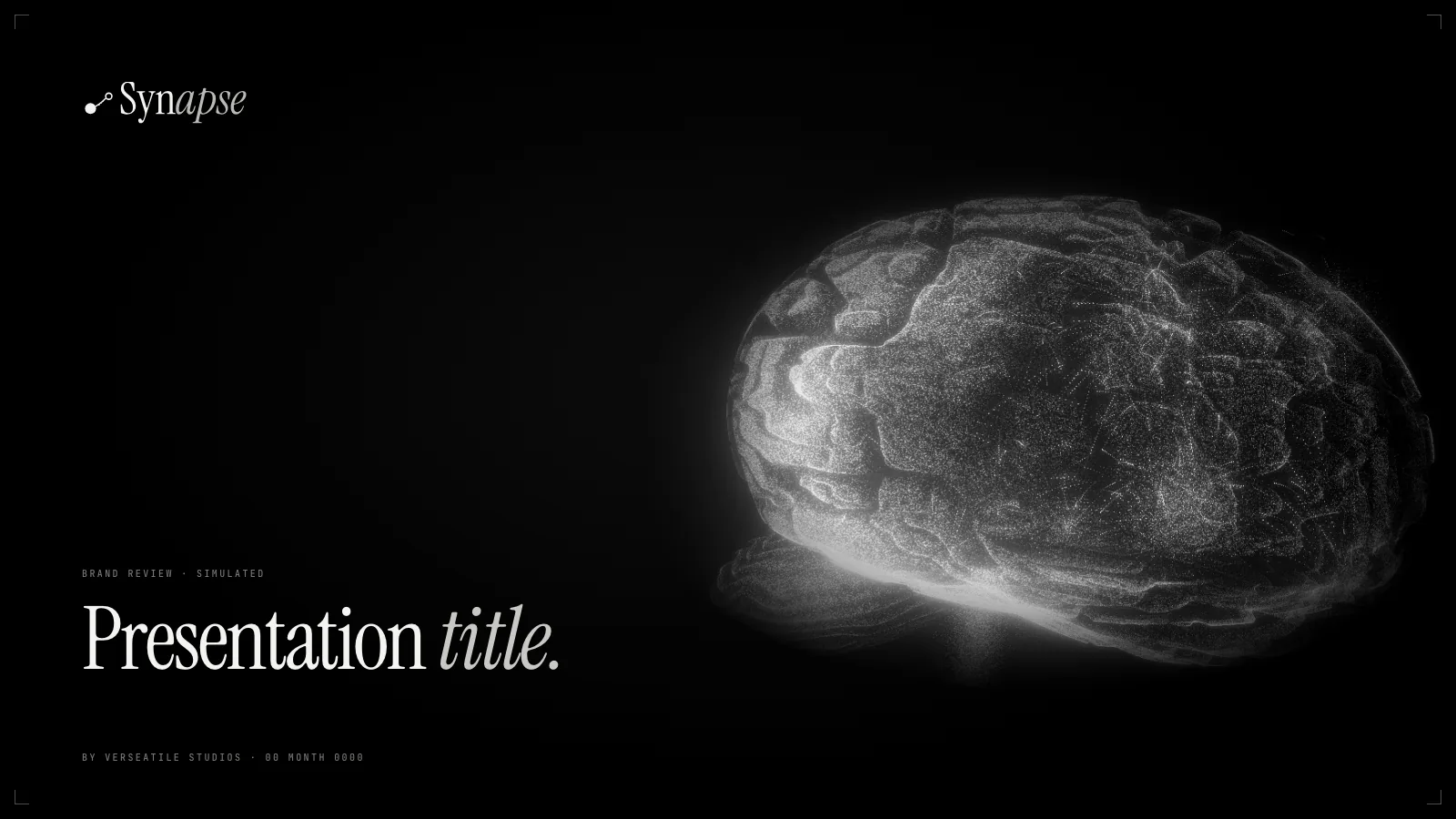
(Plate 01) The cortex plays on its own. Simulated and illustrative, not a brain scan.
Most creative decisions are made on taste and hope. Synapse gives strategists a structured read of how a stimulus moves through the brain, from the first fixation to memory seven days later, grounded in published research.
Four stages. Ten regions lit.
Pick a stage to see which regions it lights. Pick a region to see where it takes part. This is a fixed illustration of the method, not a live run.
What the eye lands on in the first second, and whether it is the right thing.
Trust, desire, stress and calm, read through the chemistry each element triggers.
What survives after 24 hours and 7 days, and whether it stays linked to your brand.
Friction, perceived value and the likelihood of the next step.
Visual cortexLow-level salience, contrast, colour, motion, edges. Lit in: Attention.
Fusiform gyrusFaces, bodies, object and logo recognition. Lit in: Attention · Memory.
AmygdalaThreat, novelty, emotional significance, arousal tagging. Lit in: Feeling.
Anterior insulaAversion, risk, price pain, discomfort. Lit in: Feeling.
Nucleus accumbensAnticipated reward, wanting. Lit in: Feeling.
HippocampusMemory encoding, context, novelty-driven learning. Lit in: Memory.
Orbitofrontal cortexReward valuation, aesthetics, comparison of options. Lit in: Decision.
Ventromedial PFCSubjective value, self-relevance, brand preference. Lit in: Decision.
Dorsolateral PFCDeliberate reasoning, working memory, scepticism. Lit in: Decision.
Anterior cingulateConflict, error detection, mismatch between claim and evidence. Lit in: Decision.
Select a region.
One dot, one study.
Neuromarketing is usually out of reach: labs, headsets and long timelines, or vague claims with no evidence behind them. We wanted something a brand team could run on any page, ad or deck, and that would show its working.
Synapse is a simulation built on published research, not a brain scan.
Before, after.
Neuro Success Index, before and after · example concepts.
These are fictional concepts, scored to show how the Index moves. They are not client results.
Synapse simulates the processing cascade, maps predicted attention, flags risks, and hands back recommendations tied to the mechanism each one moves. It now sits behind our own creative and website decisions.
A mark, a serif, one light.
Synapse needed a face of its own. The mark is a node firing across the gap to another: a filled source, a trail of three particles, an open receiver. The wordmark is set in a serif with an italic ending. Everything stays black, off-white and grey; the only colour is light.



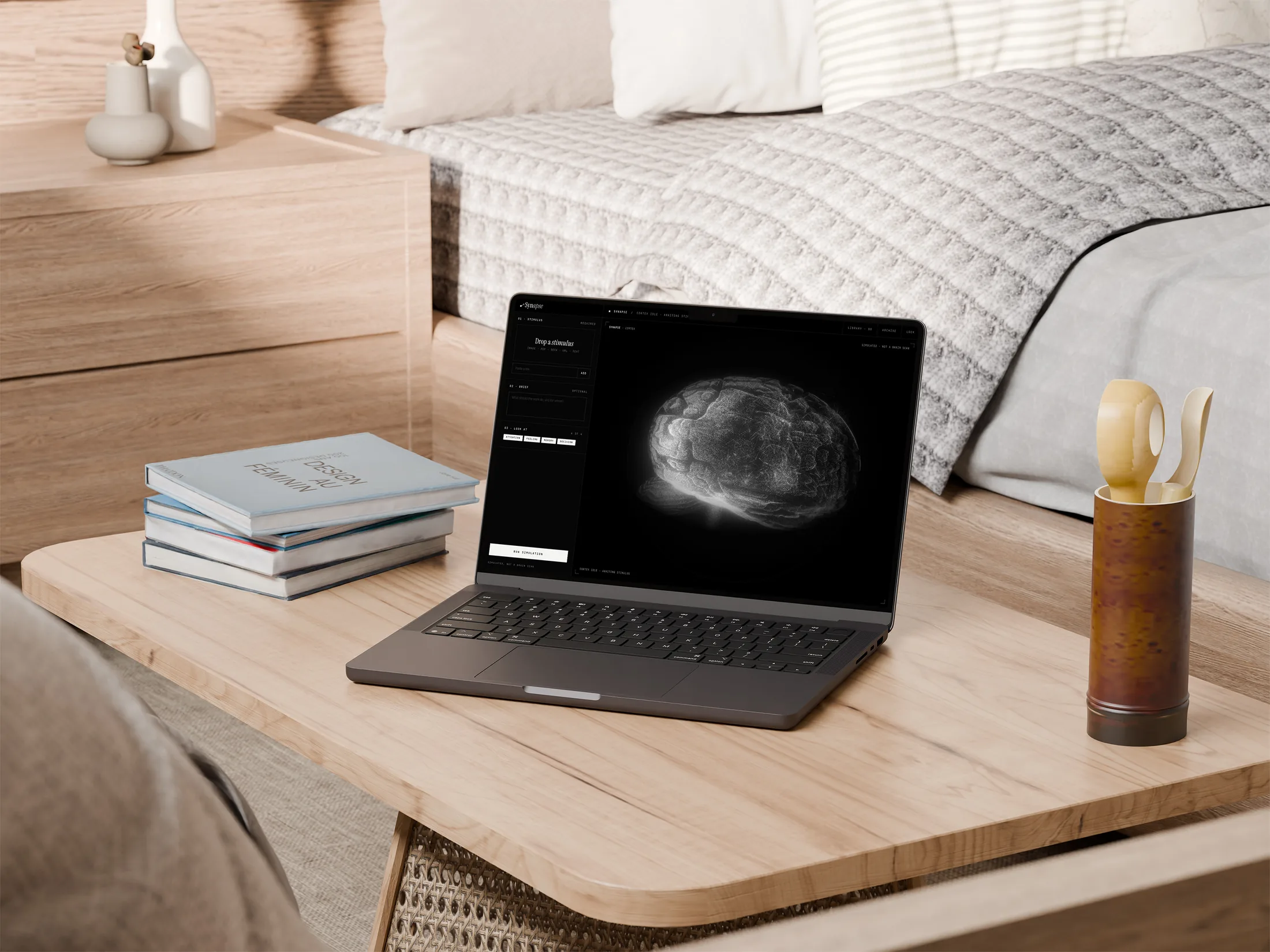
A dark room with one light on.
The interface follows the same rules: square corners, hairlines, mono labels, a serif for invitations. Screens below are layout samples. Numbers read 00 on purpose: nothing here is a result.
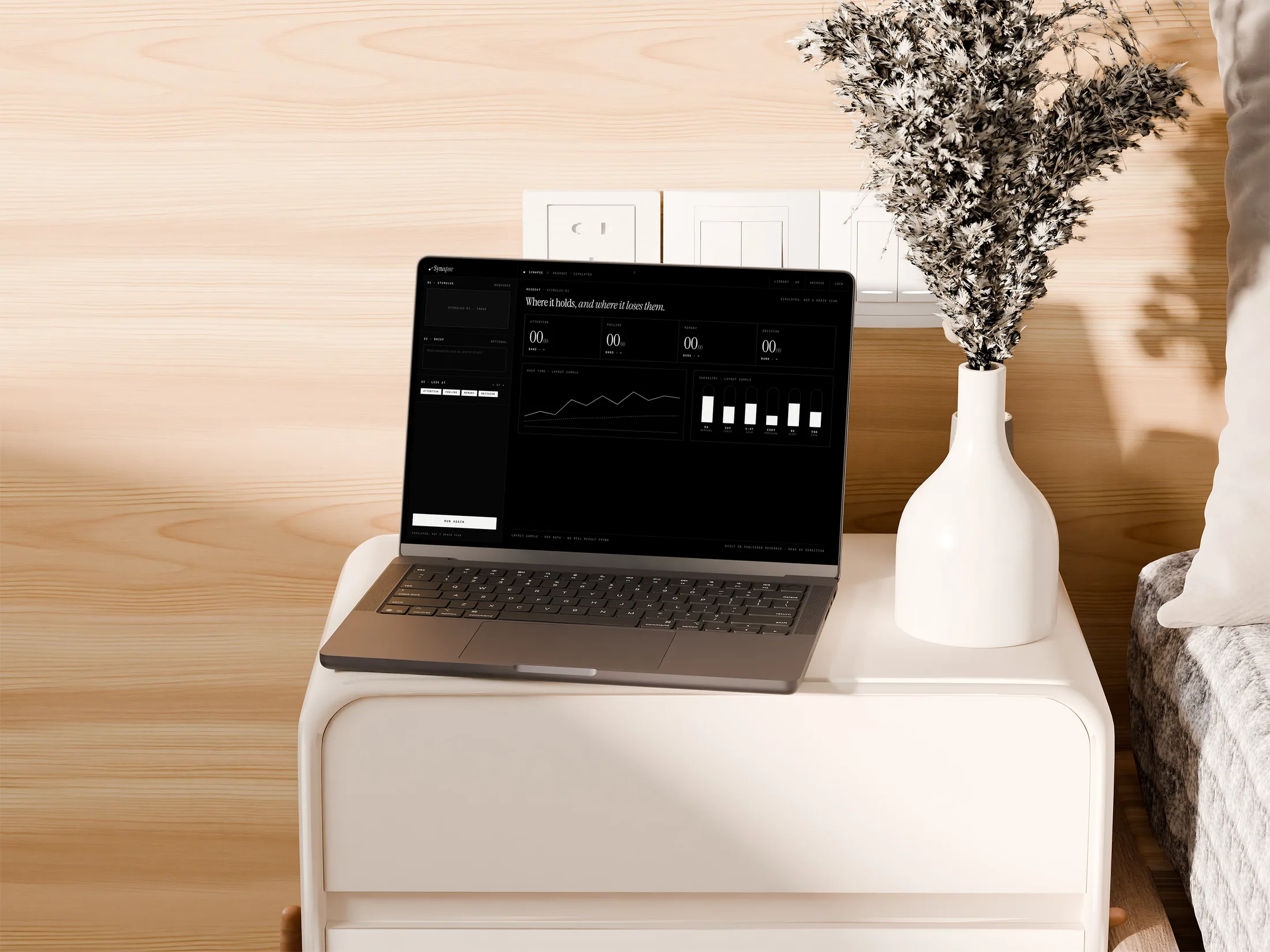
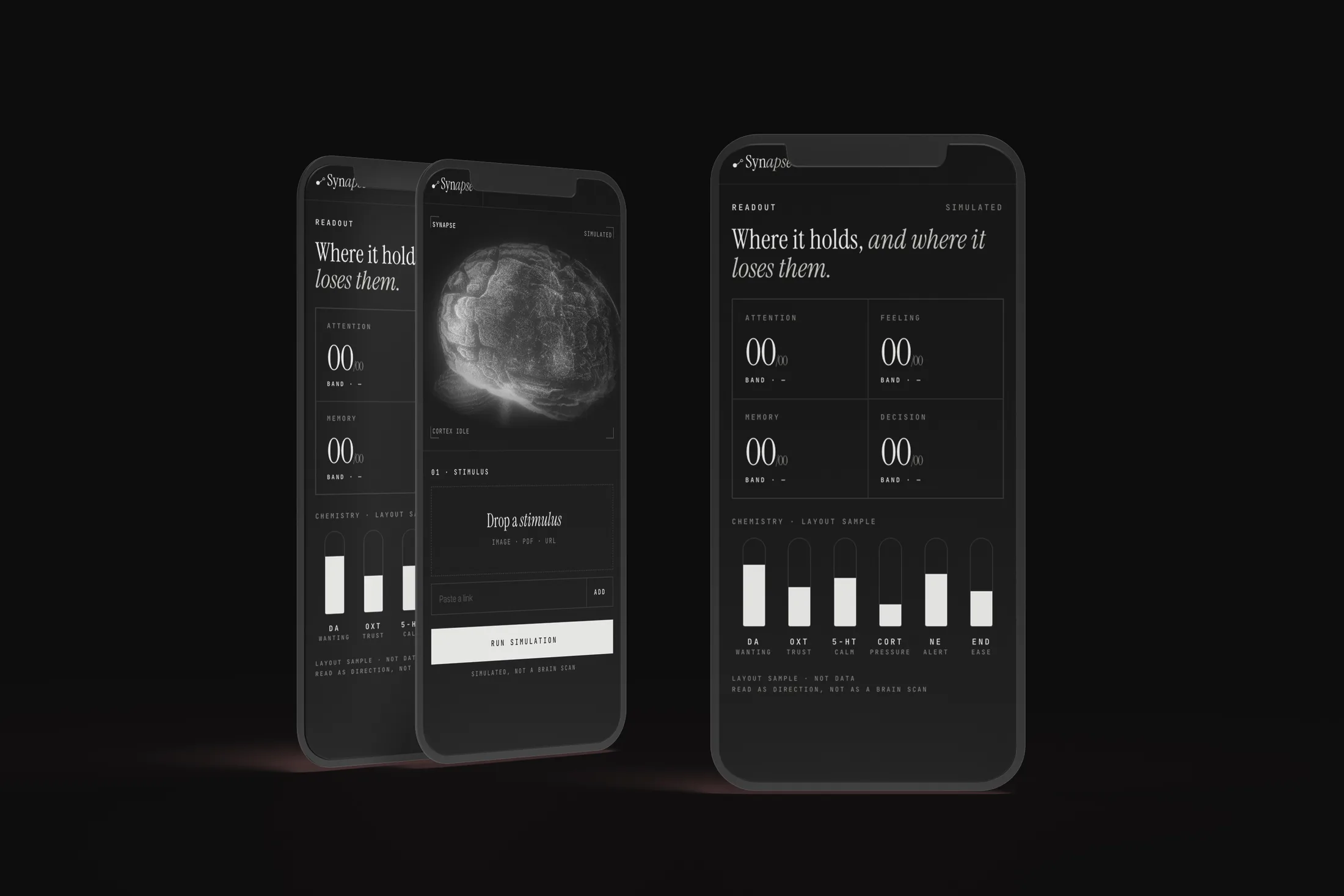
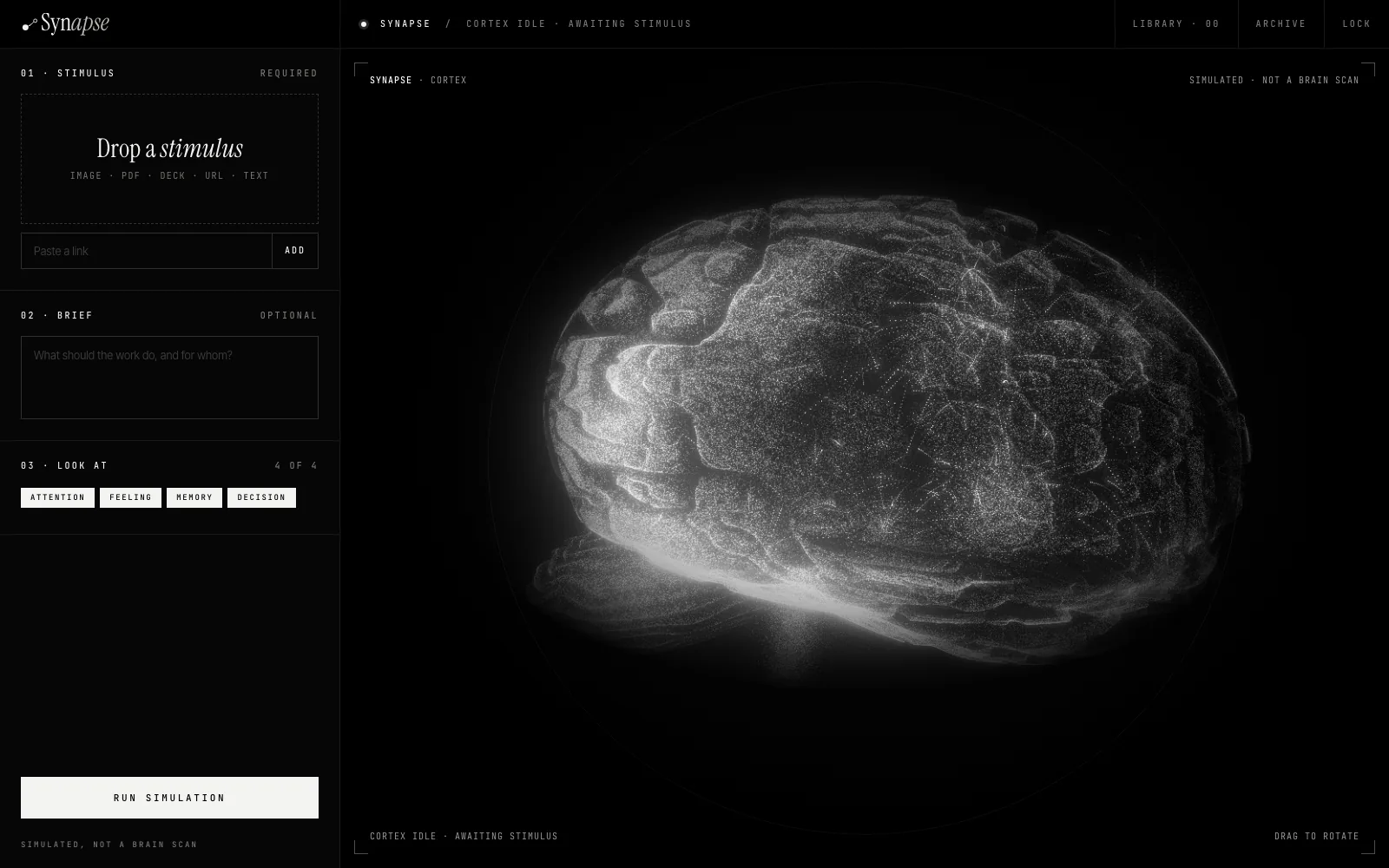
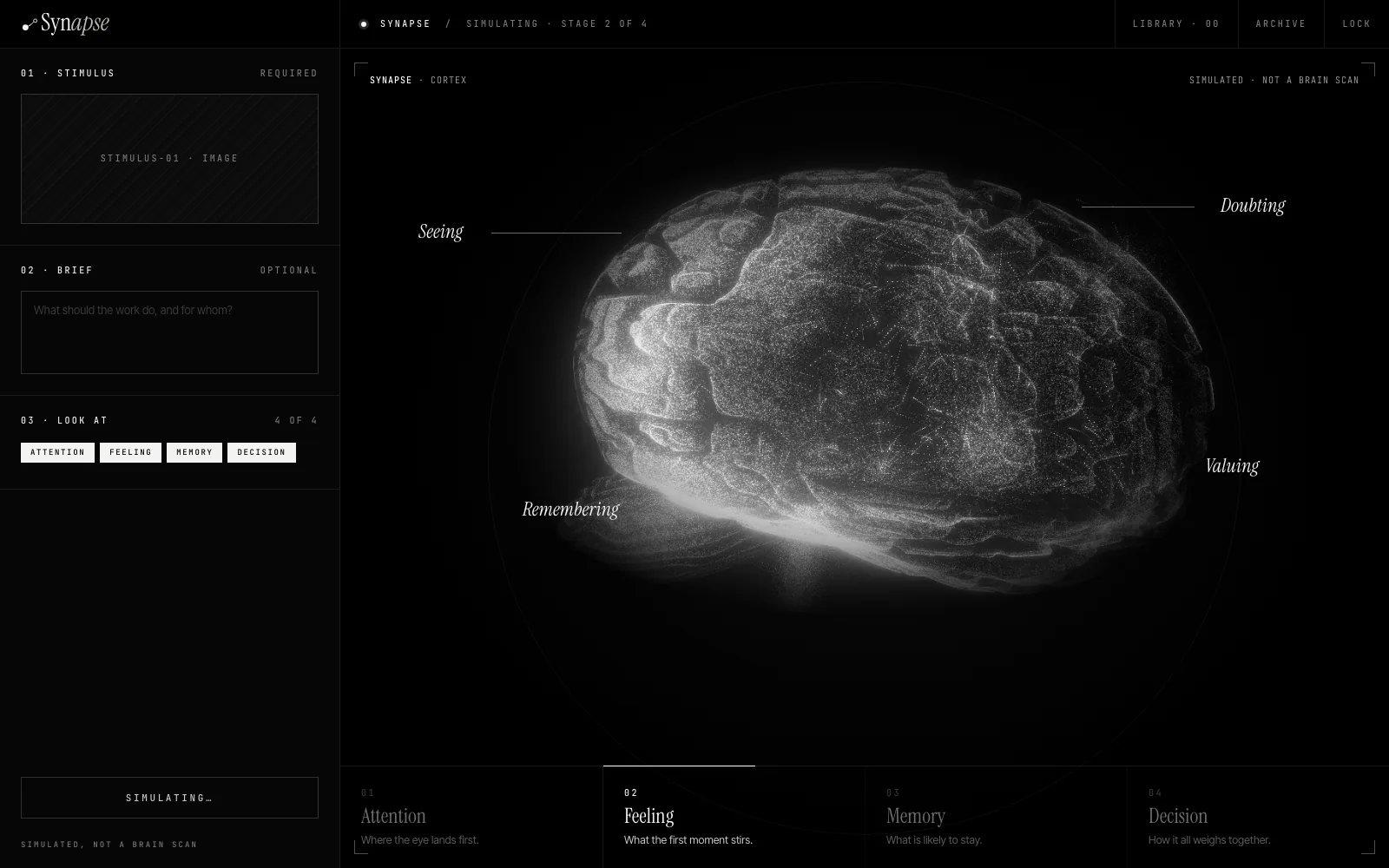
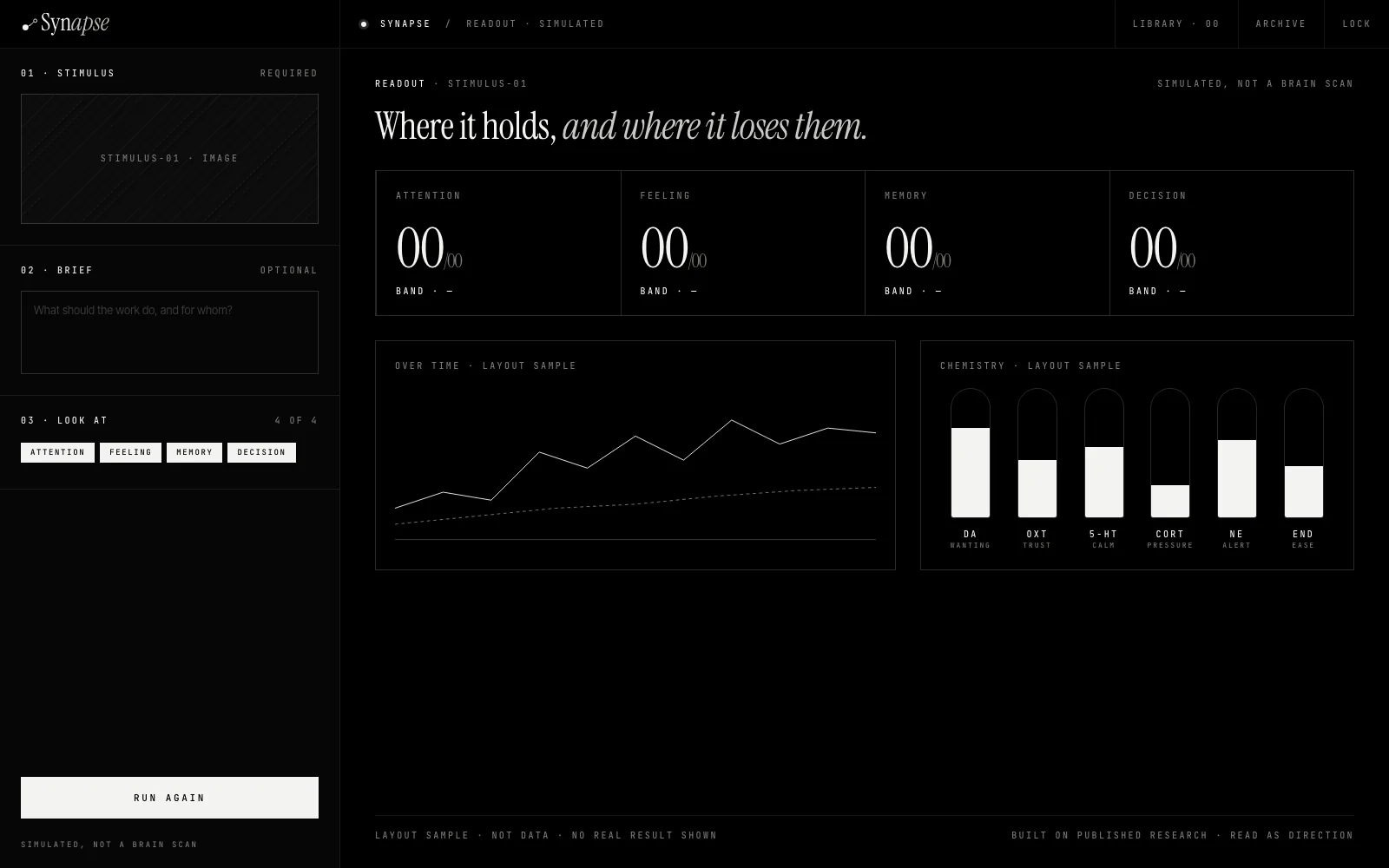
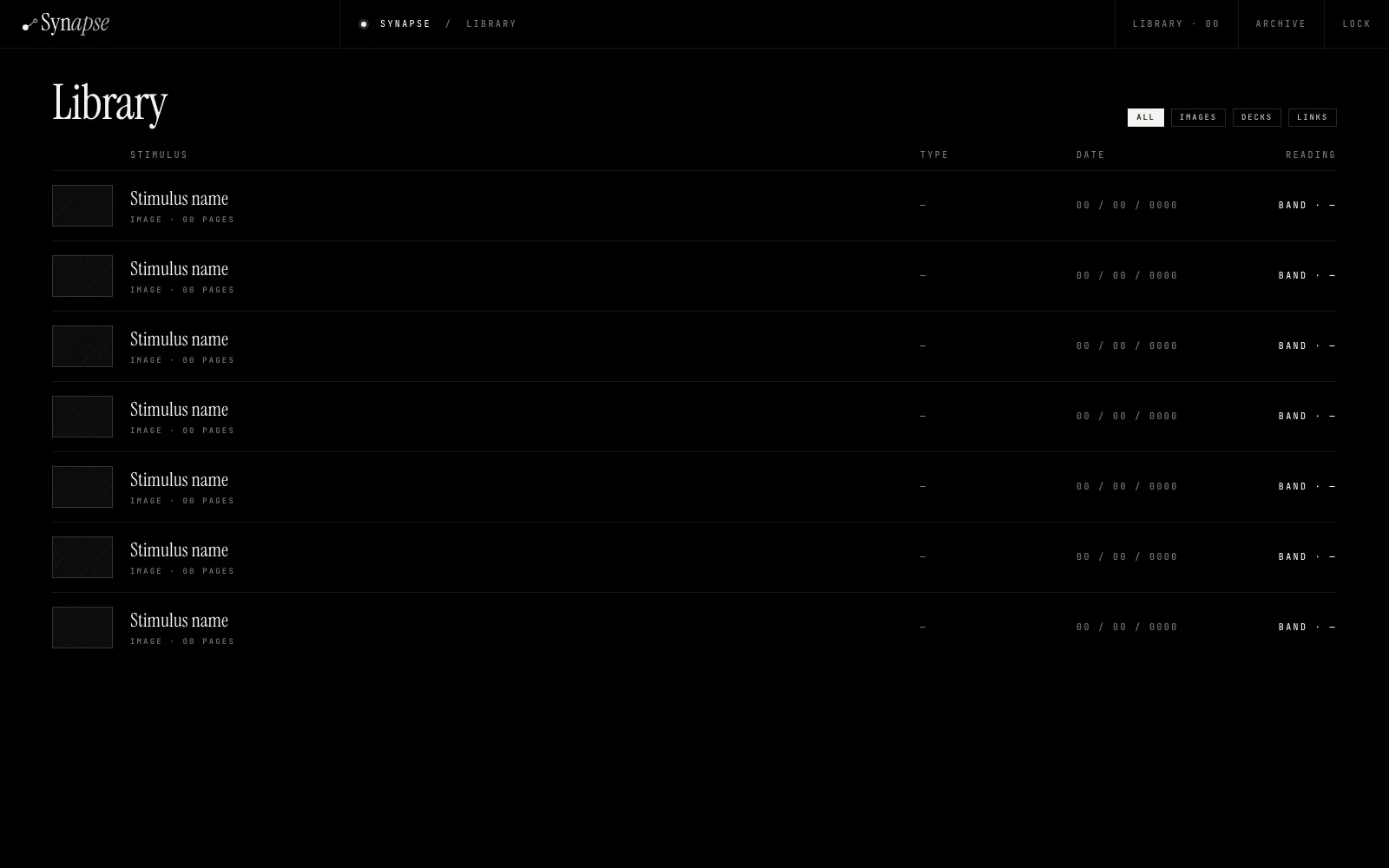
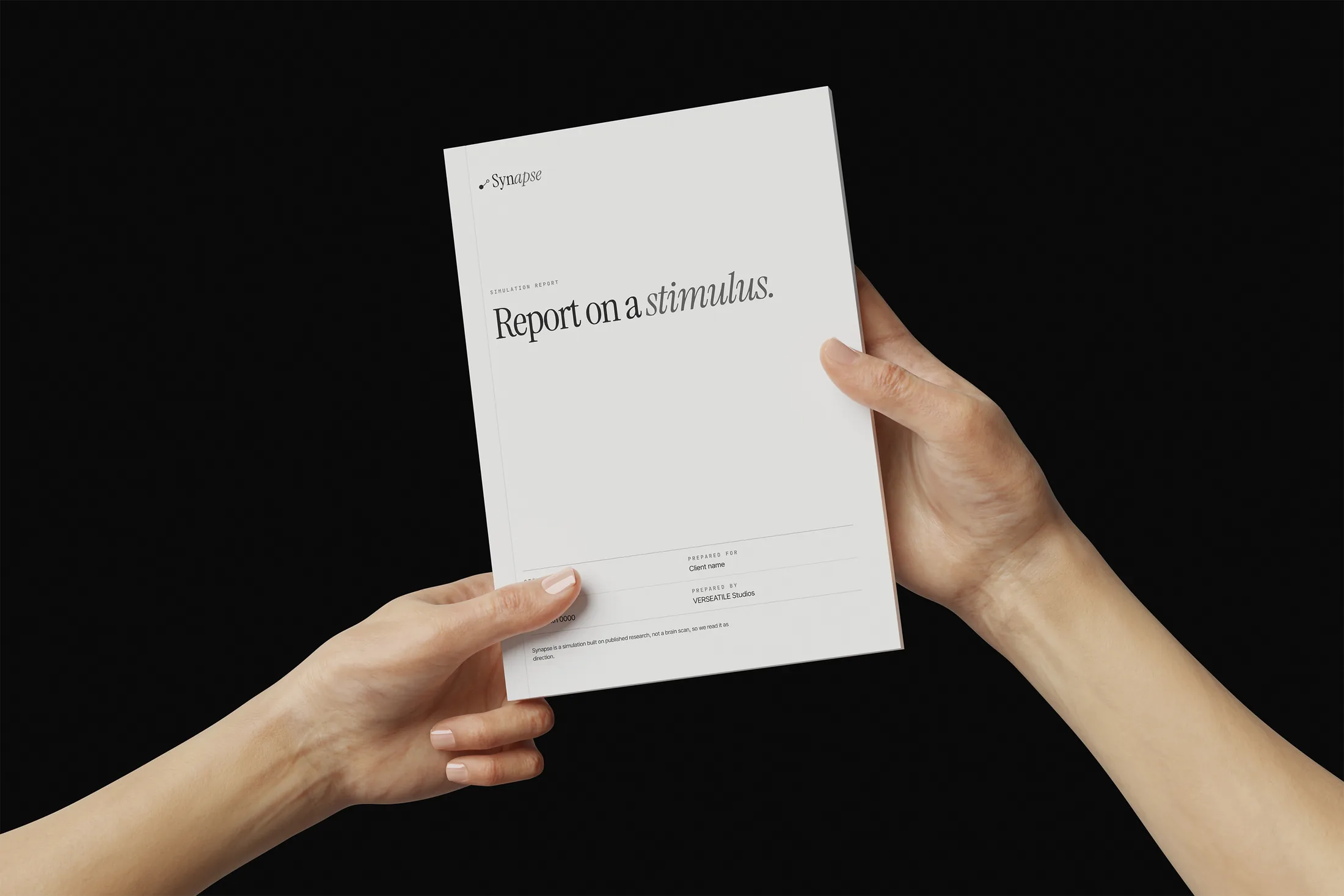
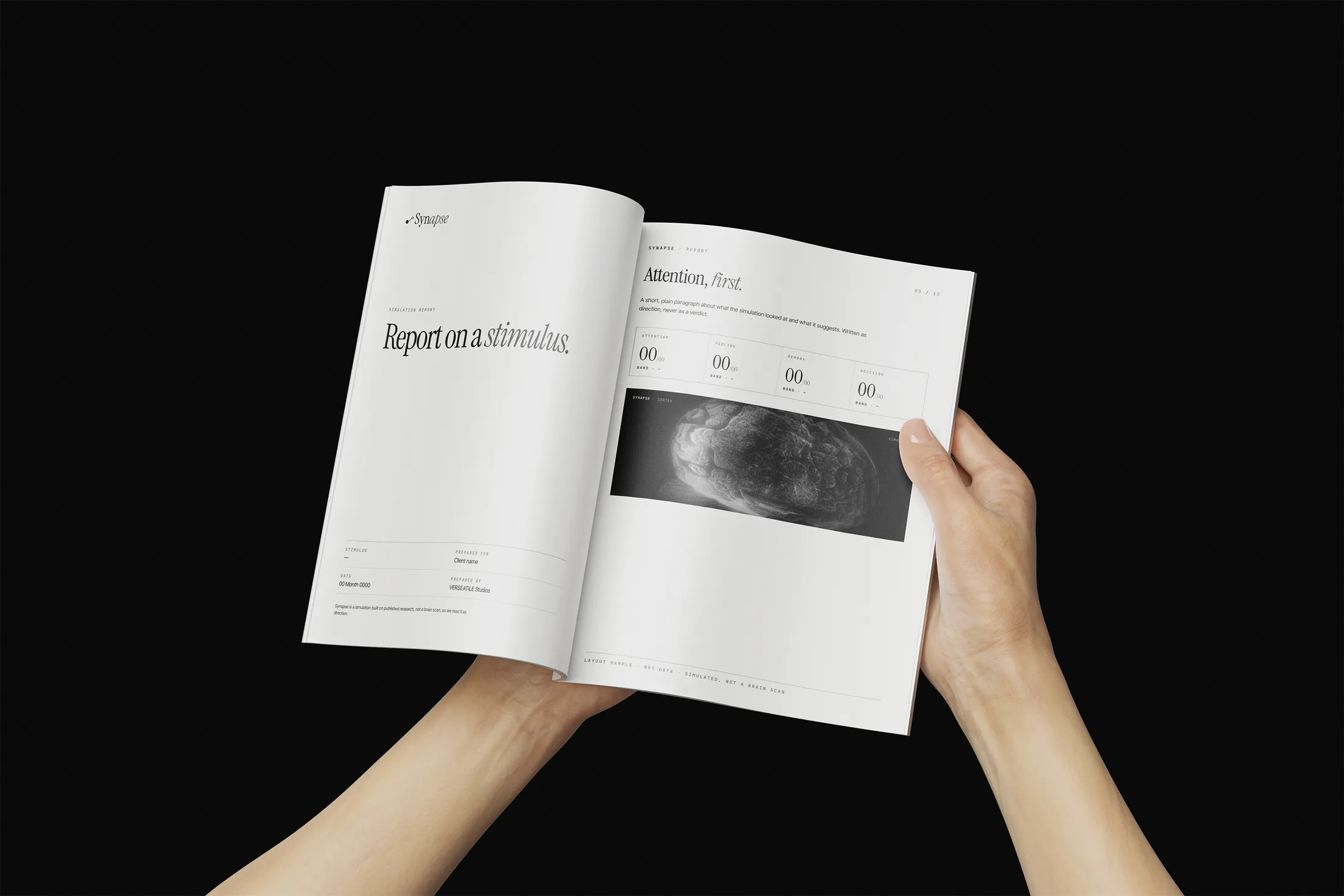
The same voice, everywhere.
Reports, decks, film end cards and the web block share one grammar. The report always carries one line: Synapse is a simulation built on published research, not a brain scan, so we read it as direction.
Next case
Jaishree Stones
All case studies →Start
a project
Want this kind of work for your brand?
Share the idea, the stage you're at and what's in the way. On the first call we'll tell you, for free, where the brand is leaking value and what it would take to fix it.